Core Takeaway
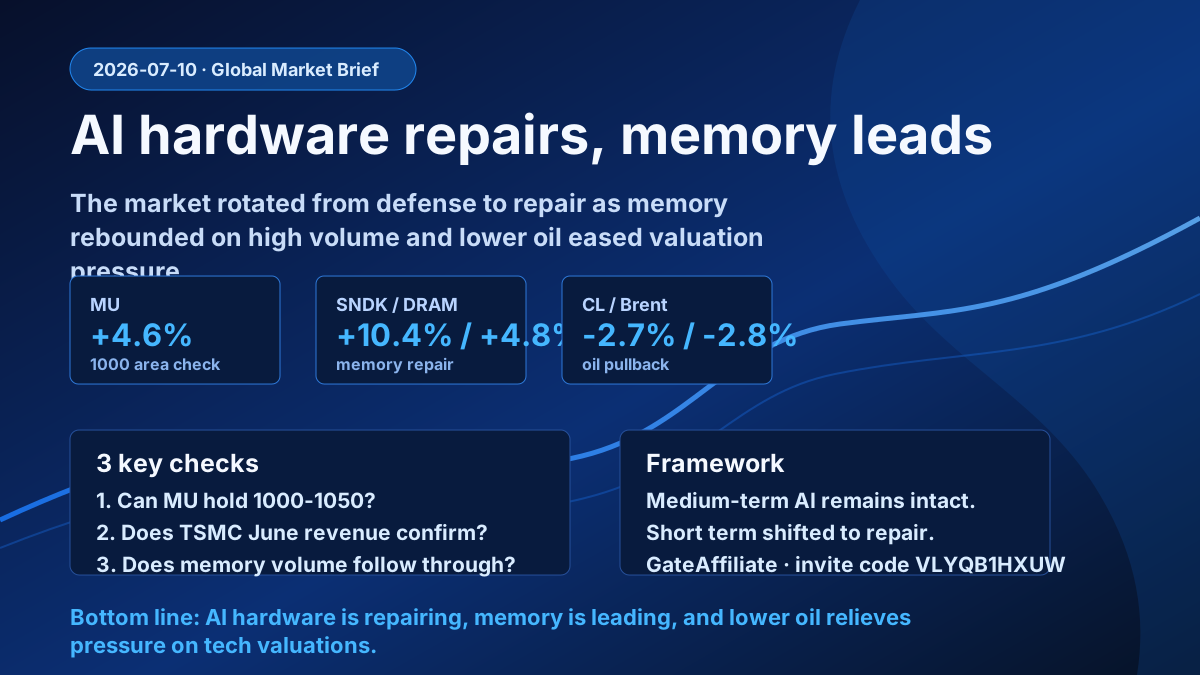
The market's main line rotated from defense back into AI hardware repair, led by a clear rebound in the memory chain. AI semiconductors have not ended, but capital is moving from panic de-risking back toward areas with data, orders and capex support.
Memory is the strongest repair direction. On TraderXYZ, SKHX, MU, SNDK and DRAM all rose on high volume, suggesting the prior volatility looked more like crowding cleanup than a broken fundamental story.
Market Structure
Micron's long-term U.S. investment plan reinforced the AI memory cycle narrative, while BofA kept a bullish view. Strong demand for SK Hynix's U.S. listing also showed that global capital still assigns a premium to core AI memory assets.
TSMC remains in a verification window. June revenue and the July 16 earnings call are the next checks, and NT$2500 remains the key resistance. If the data merely meets expectations, high-level consolidation may continue.
Lower oil helped the tech repair. As CL and BRENTOIL turned lower, short-term inflation and rate pressure eased, making semiconductor ETFs and high-beta AI names easier to repair.
Trading Frame
Keep a medium-term bullish framework for AI hardware, but do not treat one strong session as full trend restoration. Memory moves from defensive watch to repair watch, with MU 1000-1050 and DRAM / SKHX / SNDK follow-through as the key checks.
If AMD, MRVL, META and memory continue to outperform a single-name NVDA cluster, the AI trade is broadening in a healthier way. If the move fades after a gap higher, it is still only high-volatility repair.
Burry's warning on the AI trade belongs in the framework: strong AI demand and reasonable supplier valuations are separate questions. The market will increasingly watch customer cash flow, capex returns and earnings delivery.