Core Takeaway
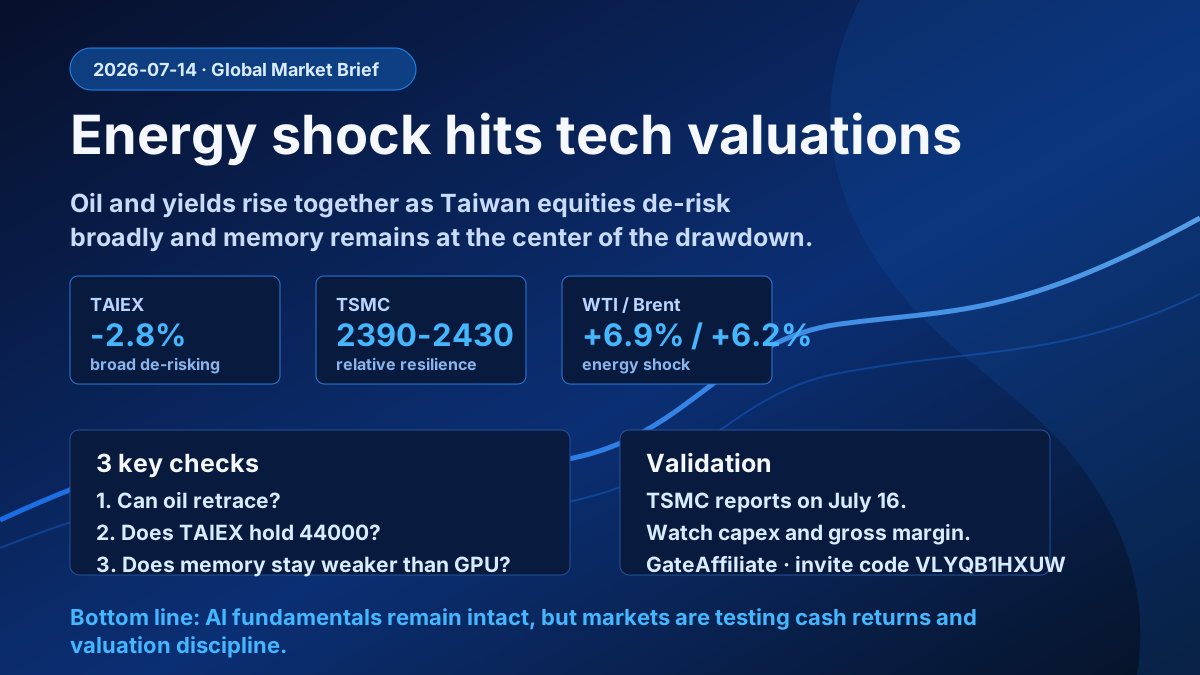
Energy has overtaken AI demand as today's primary variable. Strait of Hormuz risk pushed WTI and Brent sharply higher, lifting inflation expectations and bond yields and putting the most pressure on long-duration technology valuations.
Taiwan's decline is broad systemic de-risking rather than a TSMC-only event. The Taiwan Weighted Index traded near 44115, down about 2.8%, while TSMC held a 2390-2430 range. Relative resilience is visible, but it does not confirm the correction is over.
Semiconductor Split
Memory remains the center of the drawdown. On TraderXYZ, SKHX fell 7.64%, SNDK 9.22% and DRAM 3.04%, while MU lost much less. The pattern points to de-crowding in the biggest prior winners rather than one-day proof that HBM and DRAM fundamentals have reversed.
NVDA and AMD held up better than parts of memory and networking, suggesting the market is repricing valuation, positioning and energy costs rather than directly rejecting core AI demand.
AI capex is still rising, but the equity test has shifted from order growth to cash return. Supply-chain momentum and stock returns now need to be judged separately.
Trading Frame
First watch whether WTI and Brent can retrace toward their pre-jump levels. If oil stays elevated, a large technology drawdown alone does not mean the macro pressure has cleared.
In Taiwan, watch support near 44000 and TSMC's 2390-2400 area. At the U.S. open, compare MU, SKHY and SNDK with NVDA and AMD to test whether this is mainly memory de-crowding.
TSMC's July 16 earnings call is the next major validation point. Focus on full-year revenue growth, capex, CoWoS and advanced packaging capacity, 2nm / 3nm progress, gross margin and overseas-fab costs.