Core Takeaway
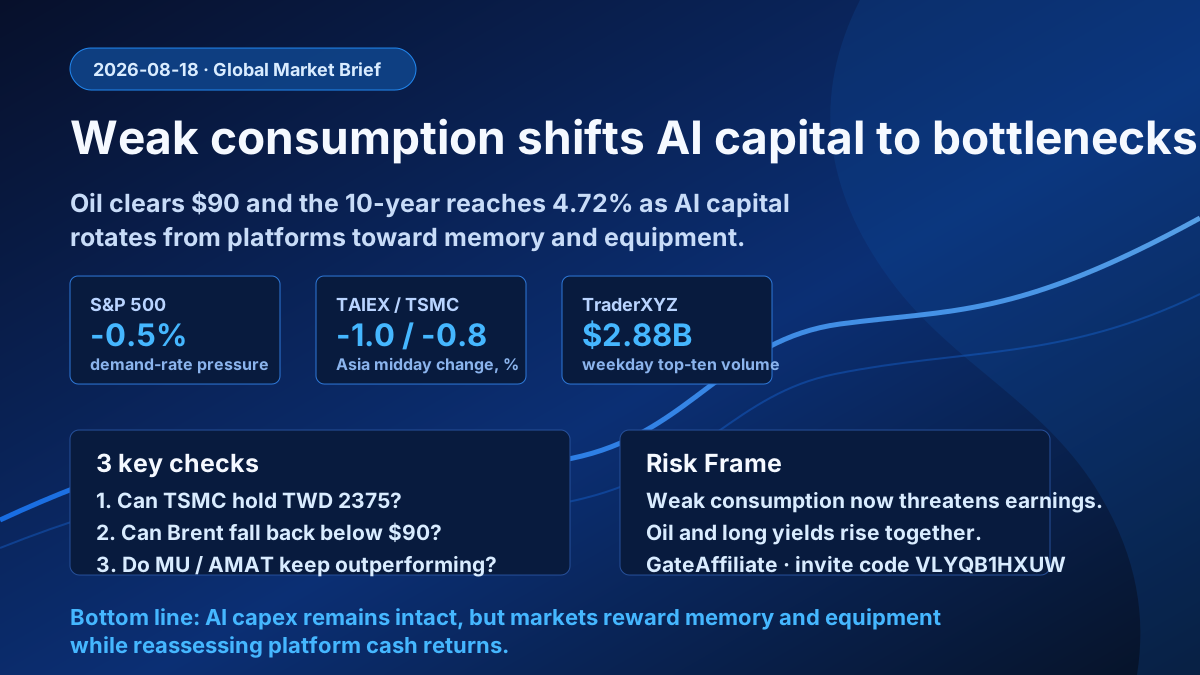
U.S. July retail sales fall 0.6% month over month, the largest decline since May 2025, and still drop 0.2% excluding autos and gasoline. Weak data are shifting from a rate benefit into a revenue and earnings risk.
Brent rises to $90.87, the U.S. 10-year yield reaches 4.72% and the S&P 500 loses 0.5%. Weaker consumption, higher energy and sticky long yields form the stagflation mix that matters most now.
AI Divergence and TSMC
AI leadership splits sharply: MU and AMAT gain 4.1% and 5.5%, and SOXX adds 1.6%, while MSFT, META and AMD decline. Markets are not rejecting AI investment; they are rewarding memory and equipment bottlenecks while demanding better platform returns on capital.
Taiwan falls about 1.02% at midday and TSMC quotes near TWD 2375/2380. July revenue still rises 44.7% year over year, so fundamentals have not broken; global risk, oil and valuation explain the near-term pressure, making 2375 the key support.
TraderXYZ top-ten notional reaches about $2.881 billion, roughly 6% below August 14. Memory and oil remain the two clearest themes, but diverging memory prices require confirmation from U.S. cash shares, SOXX / SMH and options.
What Confirms Next
Watch Walmart, Target and Home Depot for evidence on consumer tiers, and whether August data show July was a promotion and tax-refund timing issue. One weak month does not yet confirm a trend reversal.
Confirmation requires Brent below $90, the 10-year yield easing from 4.72%, MU / AMAT continuing to outperform SOXX and TSMC holding 2375. AI capex remains strong, but related stocks cannot ignore valuation and cash flow.